

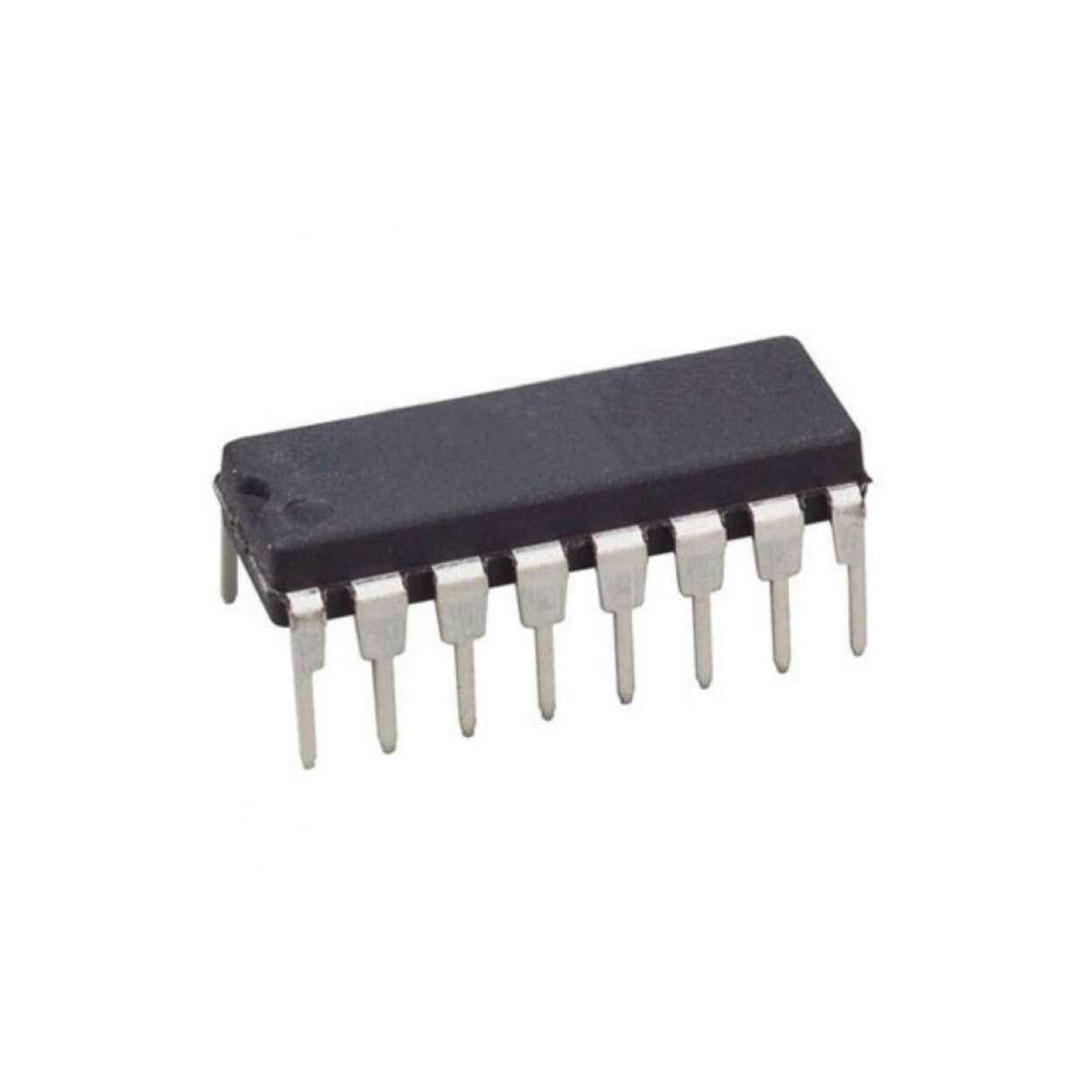
MAX232 Serial Level RS232 to TTL Interface Chip Converter IC DIP-16
The MAX232 is a reliable RS232-to-TTL serial level converter IC in a compact DIP-16 package, enabling seamless interfacing between RS232 devices and TTL/CMOS logic levels. It integrates dual charge pumps to generate +10V and -10V from a single +5V supply, ensuring full RS232 voltage compliance without external components. Four drivers and receivers support bidirectional communication, with typical 300ns propagation delay for high-speed data transfer up to 120kbps. Built-in 0.1µF capacitor support simplifies design, while ESD protection up to ±15kV safeguards against transients. Operating from 0-70°C at 4.5-5.5V, it’s ideal for microcontroller projects, embedded systems, Arduino/RS485 bridges, and legacy PC interfacing. Housed in standard 16-pin DIP (19.18×6.48mm), it offers easy prototyping and drop-in replacement for older RS232 chips like 1488/1489. Perfect for IoT gateways, GPS modules, and serial debugging—delivering robust, low-power (10mA typical) performance in space-constrained applications.
Features
- Dual charge pumps generate ±10V RS232 levels from single +5V supply, eliminating bulky external transformers for compact designs.
- Four drivers and four receivers enable full-duplex bidirectional communication, supporting multiple serial channels simultaneously.
- Low 300ns propagation delay ensures high-speed data rates up to 120kbps, ideal for real-time microcontroller interfacing.
- Integrated 0.1µF capacitor support simplifies circuitry with no external components needed, reducing BOM cost and board space.
- ±15kV ESD protection on RS232 pins safeguards against electrostatic discharge, enhancing reliability in industrial environments.
- Low power consumption (10mA typical) extends battery life in portable devices like GPS trackers and IoT sensors.
- Wide supply range (4.5-5.5V) and 0-70°C operation deliver robust performance across varied applications and temperatures.
- 16-pin DIP package provides easy prototyping and drop-in compatibility with legacy RS232-to-TTL converters.
Pin Configuration
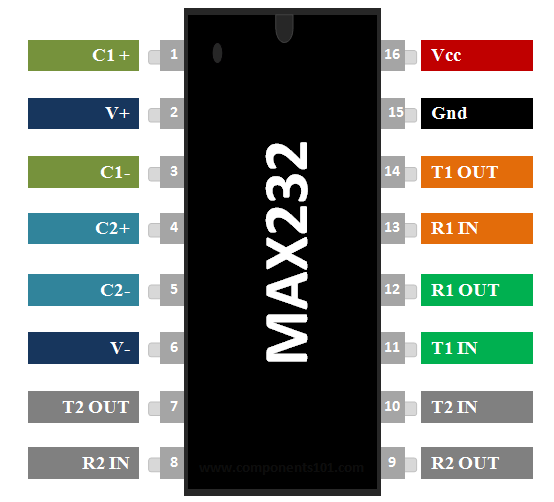
| Pin Number | Pin Name | Description |
| 1 | C1 + | Connects to the positive end of First capacitor |
| 2 | V+ | Connects to one end of the capacitor & other end is grounded |
| 3 | C1 – | Connects to the negative end of First Capacitor |
| 4 | C2+ | Connects to positive end of second capacitor |
| 5 | C2- | Connects to negative end of second capacitor |
| 6 | V- | Connects to one end of the capacitor & other end is grounded |
| 7 | T2 OUT | Transmission pin of second converter module for RS232 cable |
| 8 | R2 IN | Reception pin of second converter module for RS232 cable |
| 9 | R2 OUT | Reception pin of second converter module for Microcontroller(Rx) |
| 10 | T2 IN | Transmission pin of second converter module for Microcontroller(Tx) |
| 11 | T1 IN | Transmission pin of first converter module for Microcontroller(Tx) |
| 12 | R1 OUT | Reception pin of first converter module for Microcontroller(Rx) |
| 13 | R1 IN | Reception pin of first converter module for RS232 cable |
| 14 | T1 OUT | Transmission pin of first converter module for RS232 cable |
| 15 | Ground | Connects to the ground of the circuit |
| 16 | Vcc | Connects to the supply voltage typically +5V |
Specifications
| Physical | |
| Case/Package | PDIP |
| Contact Plating | Tin |
| Mount | Through Hole |
| Number of Pins | 16 |
| Technical | |
| Data Rate | 120 kbps |
| ESD Protection | No |
| Interface | RS-232 |
| Logic Function | Receiver, Transceiver |
| Max Operating Temperature | 70 °C |
| Max Supply Current | 10 mA |
| Max Supply Voltage | 5.5 V |
| Min Operating Temperature | 0 °C |
| Min Supply Voltage | 4.5 V |
| Nominal Supply Current | 5 mA |
| Number of Drivers | 2 |
| Number of I/Os | 8 |
| Number of Receivers | 2 |
| Number of Transceivers | 1 |
| Number of Transmitters | 2 |
| Operating Supply Current | 10 mA |
| Operating Supply Voltage | 5 V |
Dimensions

Applications
- Microcontroller serial communication interfaces for Arduino, PIC, or 8051 projects.
- Level shifting between RS232 devices and TTL/CMOS logic in embedded systems.
- Legacy PC serial port connections to modern microcontrollers for debugging.
- GPS module integration with single-board computers like Raspberry Pi.
- Industrial control systems requiring RS232-to-TTL conversion for sensors.
- IoT gateways bridging RS232 sensors to TTL networks.
- Serial data logging and monitoring in data acquisition setups.
- Vintage equipment restoration, such as old modems or terminals.
- Wireless module interfaces (e.g., XBee) needing RS232 compatibility.
- Educational prototyping for learning serial protocols and level conversion.
Package Contents
- 1 x MAX232 Serial Level RS232 to TTL Interface Chip Converter IC DIP-16
Reviews
There are no reviews yet.