

Introduction
- In the rapidly expanding world of the Internet of Things (IoT), efficient and reliable wireless communication is crucial.
- LoRa (Long Range) technology has emerged as a leading solution for low-power, wide-area networks (LPWAN), enabling devices to transmit data over kilometers while consuming minimal energy.
This blog explores
- What is LoRa?
- How LoRa Works
- LoRa vs. Other Wireless Technologies
- Real-World Applications
- Advantages & Limitations
- Future of LoRa & LoRaWAN
- What You’ll Need to build a Private LoRa Network
What is LoRa?
LoRa (Long Range) is a wireless modulation technique developed by Semtech, designed for long-distance, low-power communication. It operates in sub-GHz license-free bands (e.g., 868 MHz in Europe, 915 MHz in the US, 433 MHz in Asia).
LoRa is part of the LoRaWAN protocol (a MAC layer protocol), which defines how devices communicate in a network.
Key Features of LoRa:
- ✅ Long Range – Up to 15 km in rural areas, 3-5 km in urban settings.
- ✅ Low Power – Ideal for battery-operated devices (lasting years).
- ✅ Low Bandwidth – Optimized for small data packets (e.g., sensors).
- ✅ Secure – AES-128 encryption for data protection.
How Does LoRa Work?
1. LoRa Modulation (Physical Layer)
LoRa uses Chirp Spread Spectrum (CSS) modulation, which:
- ✔ Spreads the signal over a wide frequency band.
- ✔ Provides high interference resistance.
- ✔ Enables long-range communication even at low power.
2. LoRaWAN (Network Architecture)
LoRaWAN defines the network protocol and operates in a star-of-stars topology:
- End Nodes (Devices) – Sensors or actuators (e.g., smart meters).
- Gateways – Receive data from nodes and forward it to a network server.
- Network Server – Manages data routing, security, and device authentication.
- Application Server – Processes the data (e.g., cloud dashboard).
3. Device Classes (LoRaWAN Modes)
| Class | Description | Use Case |
|---|---|---|
| Class A | Battery-optimized (sleeps most of the time) | Smart agriculture, sensors |
| Class B | Scheduled receive windows (low latency) | Asset tracking |
| Class C | Always listening (highest power use) | Real-time applications |
LoRa vs. Other Wireless Technologies
| Technology | Range | Power Use | Data Rate | Best For |
|---|---|---|---|---|
| LoRa | 3-15 km | Very Low | 0.3-50 kbps | Long-range IoT |
| Wi-Fi | <100 m | High | 50-1000 Mbps | High-speed data |
| Bluetooth | <100 m | Medium | 1-3 Mbps | Short-range devices |
| Zigbee | 10-100 m | Low | 250 kbps | Smart home |
| NB-IoT | 1-10 km | Low | 200 kbps | Cellular IoT |
Why Choose LoRa?
- Better range than Wi-Fi/Bluetooth.
- Lower power than cellular (NB-IoT).
- No subscription fees (unlike cellular networks).

Real-World Applications of LoRa
1. Smart Agriculture
- Soil moisture sensors transmit data to optimize irrigation.
- Livestock tracking over vast farmlands.
2. Smart Cities
- Waste management (smart bins alert when full).
- Street lighting control (adjusts brightness based on activity).
3. Industrial IoT
- Predictive maintenance (monitoring machinery health).
- Supply chain tracking (real-time location of goods).
4. Environmental Monitoring
- Air quality sensors in remote areas.
- Flood detection systems in rivers.
Advantages & Limitations of LoRa
✅ Advantages
- ✔ Long-range (ideal for rural & urban IoT).
- ✔ Low power (batteries last 5-10 years).
- ✔ Cost-effective (no cellular fees).
- ✔ Scalable (supports millions of devices).
❌ Limitations
- ✖ Low data rate (not for video/audio streaming).
- ✖ Limited bandwidth (small payloads only).
- ✖ Network congestion in dense deployments.
Future of LoRa & LoRaWAN
- LoRa 2.0 (Coming Soon) – Expected to improve data rates & efficiency.
- Satellite LoRa (IoT from space) – Companies like Lacuna Space are deploying LoRa satellites.
- 5G & LoRa Integration – Hybrid networks for diverse IoT needs.
What You’ll Need to build a Private LoRa Network
- ✅ LoRa Gateways (1 or more, depending on coverage)
- ✅ LoRa End Devices (sensors, trackers, etc.)
- ✅ LoRaWAN Network Server (LNS) (self-hosted or cloud-based)
- ✅ Antennas & Cables (for optimal signal strength)
- ✅ Power & Connectivity (Ethernet, Wi-Fi, or cellular for gateways)
Conclusion
LoRa has revolutionized low-power, long-range IoT communication, making it a top choice for smart cities, agriculture, and industrial automation. While it’s not suited for high-speed data, its energy efficiency, affordability, and scalability make it indispensable for the growing IoT ecosystem.
Are you using LoRa in your projects? Share your experiences below!
Further Reading
مقدمة
في عالم إنترنت الأشياء (IoT) الذي يشهد نمواً متسارعاً، تعد الاتصالات اللاسلكية الفعالة والموثوقة أمراً بالغ الأهمية. ومن هذا المنطلق، برزت تقنية LoRa (المدى الطويل) كإحدى أبرز التقنيات الرائدة في شبكات الطاقة المنخفضة ذات النطاق الواسع (LPWAN)، حيث تمكن الأجهزة من تبادل البيانات عبر مسافات تصل إلى عدة كيلومترات باستهلاك ضئيل جداً للطاقة.
تتناول هذه المقالة المحاور التالية:
- ما هي تقنية LoRa؟
- آلية عمل تقنية LoRa
- مقارنة بين LoRa والتقنيات اللاسلكية الأخرى
- تطبيقات من الواقع العملي
- المميزات والقيود التقنية
- مستقبل تقنيات LoRa و LoRaWAN
- المتطلبات الأساسية لبناء شبكة LoRa خاصة
ما هي تقنية LoRa؟
تقنية LoRa (Long Range) هي آلية تعديل لاسلكي طورتها شركة Semtech، صُممت خصيصاً لتأمين اتصالات بعيدة المدى واقتصادية في استهلاك الطاقة. وتعمل هذه التقنية ضمن نطاقات تردديّة مجانية غير مرخصة دون الجيجاهرتز (مثل 868 ميجاهرتز في أوروبا، 915 ميجاهرتز في الولايات المتحدة، و433 ميجاهرتز في آسيا).
وتشكل تقنية LoRa الطبقة الفيزيائية التي يعتمد عليها بروتوكول LoRaWAN (وهو بروتوكول طبقة التحكم في الوصول للوسط – MAC)، والذي يحدد القواعد الحاكمة لكيفية تواصل الأجهزة وتبادلها للبيانات داخل الشبكة.
المزايا الرئيسية لتقنية LoRa:
- ✅ مدى تغطية بعيد: يصل إلى 15 كيلومتراً في المناطق الريفية المفتوحة، ومن 3 إلى 5 كيلومترات في البيئات العمرانية الحضرية.
- ✅ استهلاك منخفض جداً للطاقة: مثالي للأجهزة والمستشعرات التي تعمل بالبطاريات، حيث يمكن أن تدوم لسنوات طويلة.
- ✅ نطاق ترددي منخفض: مهيأ ومحسن لنقل حزم البيانات الصغيرة والصادرة عن أجهزة الاستشعار.
- ✅ أمان وتشفير عالٍ: يعتمد على نظام تشفير متقدم بمعيار AES-128 لحماية البيانات وضمان خصوصيتها.
كيف تعمل تقنية LoRa؟
1. تعديل الإشارة عبر طبقة LoRa (الطبقة الفيزيائية)
تعتمد التقنية على هندسة تعديل الطيف الانتشاري الم chirp (CSS)، والتي تتميز بالتالي:
- ✔ توزيع إشارة البث ونشرها عبر نطاق ترددي واسع.
- ✔ توفير مقاومة وحصانة عالية جداً ضد التشويش والتداخلات اللاسلكية الخارجية.
- ✔ تمكين الأجهزة من إرسال البيانات عبر مسافات شاسعة حتى مع مستويات الطاقة المنخفضة.
2. بروتوكول وبنية شبكة LoRaWAN
يحدد بروتوكول LoRaWAN الطوبولوجيا الحاكمة لإدارة وتوجيه عمليات الاتصال، حيث تعتمد الشبكة على طوبولوجيا النجمة المتداخلة (Star-of-Stars):
- العقد الطرفية (الأجهزة): تمثل المستشعرات أو المشغلات الميدانية (مثل العدادات الذكية).
- البوابات (Gateways): تستقبل البيانات اللاسلكية القادمة من العقد الطرفية، لتقوم بتحويلها وتمريرها مباشرة إلى خادم الشبكة.
- خادم الشبكة (Network Server): يتولى مهام توجيه البيانات، وحفظ الأمن، والتحقق من صلاحيات الأجهزة الملحقة.
- خادم التطبيق (Application Server): يعالج البيانات ويعرضها للمستخدم النهائي (مثل لوحات التحكم السحابية Dashboard).
3. فئات الأجهزة (أنماط تشغيل LoRaWAN)
| الفئة | الوصف التقني | حالة الاستخدام النموذجية |
|---|---|---|
| الفئة أ | تحسين فائق لاستهلاك طاقة البطارية (يدخل الجهاز في نمط الخمول معظم الوقت). | الزراعة الذكية، مستشعرات البيئة المتنوعة. |
| الفئة ب | نوافذ استقبال مجدولة ومحددة زمنياً مسبقاً (تمنح زمن استجابة منخفض). | تتبع وإدارة الأصول والمعدات المتحركة. |
| الفئة ج | الاستماع الدائم والمستمر لخطوط الإشارة (أعلى استهلاك للطاقة للتشغيل). | تطبيقات الاستجابة اللحظية والتحكم المباشر. |
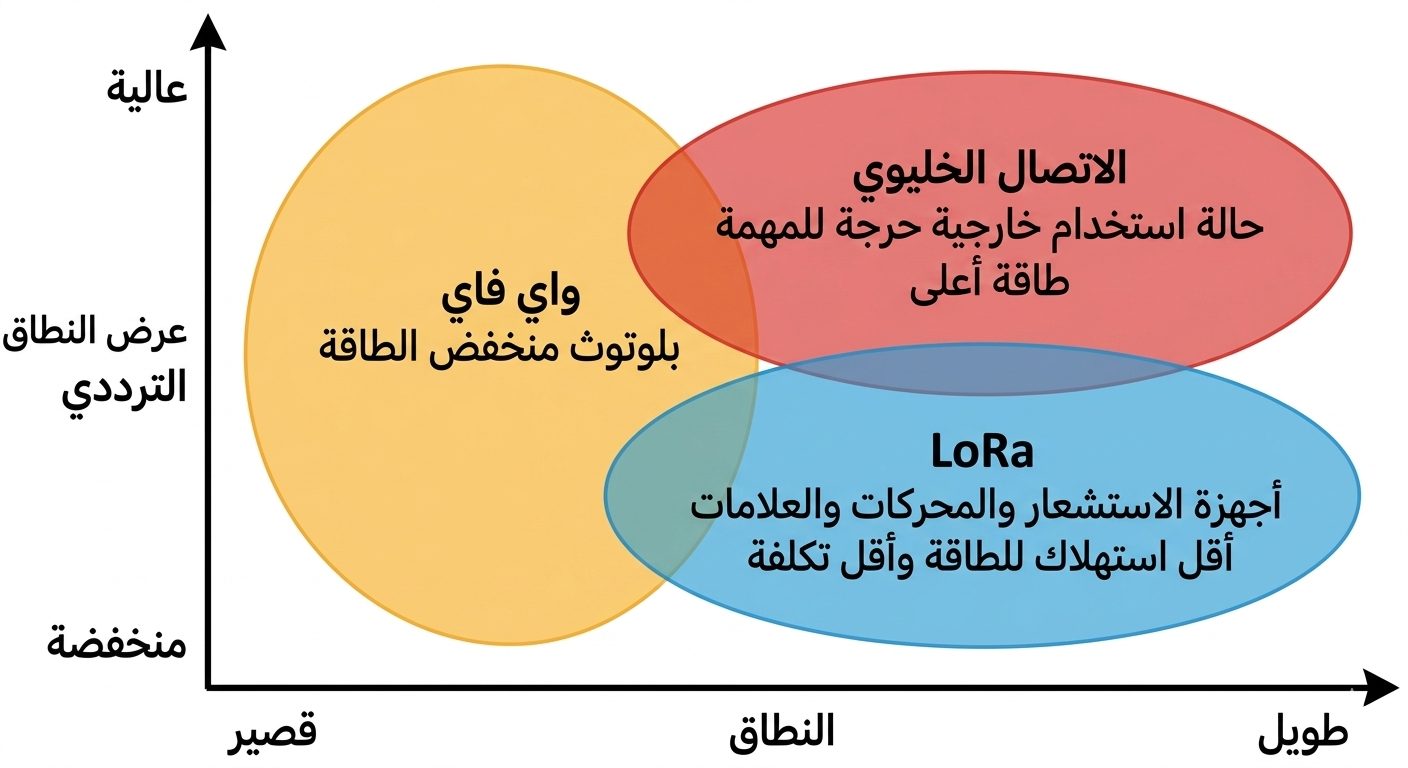
| التقنية | نطاق التغطية | معدل استهلاك الطاقة | معدل نقل البيانات | الاستخدام الأمثل |
|---|---|---|---|---|
| LoRa | 3-15 كيلومتر | منخفض جداً | 0.3 – 50 كيلوبت/ثانية | تطبيقات إنترنت الأشياء بعيدة المدى |
| Wi-Fi | أقل من 100 متر | مرتفع | 50 – 1000 ميجابت/ثانية | نقل البيانات والملفات عالية السرعة |
| Bluetooth | أقل من 100 متر | متوسط | 1 – 3 ميجابت/ثانية | اتصال الأجهزة والملحقات قصيرة المدى |
| Zigbee | 10 – 100 متر | منخفض | 250 كيلوبت/ثانية | الأنظمة والشبكات المنزلية الذكية |
| NB-IoT | 1 – 10 كيلومتر | منخفض | 200 كيلوبت/ثانية | تطبيقات لإنترنت الأشياء القائمة على الشبكات الخلوية |
- ✔ تقدم مدى تغطية وإرسال يتفوق بمراحل على شبكات Wi-Fi والـ Bluetooth.
- ✔ تستهلك طاقة أقل بكثير مقارنة بالشبكات الخلوية مثل (NB-IoT).
- ✔ معفاة تماماً من رسوم الاشتراك وعقود الخدمة الدورية (على عكس الشبكات الخلوية).
 تطبيقات من الواقع العملي لتقنية LoRa
1. الزراعة الذكية
- توظيف مستشعرات رطوبة التربة لإرسال قراءات حية تسهم في ترشيد وتحسين عمليات الري.
- تتبع ومراقبة قطعان الماشية والحيوانات عبر مساحات المزارع الشاسعة والمفتوحة.
2. المدن الذكية
- تطوير منظومات إدارة النفايات (الحاويات الذكية التي ترسل تنبيهات فور امتلائها).
- أنظمة التحكم التلقائي في إنارة الشوارع العامة (تعديل مستويات السطوع بناءً على الحركة والنشاط المحيط).
3. إنترنت الأشياء (IoT) الصناعي
- تطبيقات الصيانة التنبؤية (رصد كفاءة وأداء الآلات وسلامتها الهيكلية بشكل دوري).
- متابعة سلاسل الإمداد والخدمات اللوجستية (معرفة المواقع الجغرافية الدقيقة للبضائع والمنتجات لحظياً).
4. المراقبة والرصد البيئي
- توزيع أجهزة قياس وتحليل جودة الهواء في المناطق البعيدة والنائية.
- منظومات استشعار وتوقع الفيضانات والسيول في مجاري الأنهار والوديان.
المميزات والقيود التقنية لـ LoRa
✅ المزايا والمكاسب:
- ✔ مدى اتصالات شاسع وبعيد (مثالي لبيئات إنترنت الأشياء الريفية والحضرية).
- ✔ تشغيل اقتصادي وموفر للطاقة (بطاريات تدوم من 5 إلى 10 سنوات).
- ✔ تكلفة تشغيلية منخفضة وفعالة (عدم الحاجة لدفع اشتراكات لشركات الاتصالات الخلوية).
- ✔ قدرة عالية على التوسع والاستيعاب (تتحمل ملايين الأجهزة والمستشعرات المتصلة).
❌ المحددات والقيود:
- ✖ سرعة ومعدل منخفض لنقل البيانات (غير صالحة إطلاقاً للبث الحي للمرئيات أو الصوتيات).
- ✖ عرض نطاق ترددي ضيق ومحدد (مخصص فقط لإرسال الحزم الصغيرة جداً).
- ✖ احتمالية حدوث تداخلات وازدحام في الشبكة عند نشر الأجهزة بكثافة مفرطة في مساحة ضيقة.
مستقبل تقنيات LoRa و LoRaWAN
- جيل LoRa 2.0 (قريباً): يتوقع أن يحدث قفزة نوعية في زيادة سرعات نقل البيانات ورفع معدلات الكفاءة الإجمالية للشبكة.
- اتصالات الأقمار الصناعية عبر LoRa: بدأت شركات رائدة (مثل Lacuna Space) في إطلاق ونشر أقمار صناعية تدعم تكنولوجيا LoRa لتغطية الكوكب بإنترنت الأشياء من الفضاء.
- التكامل والاندماج مع شبكات الـ 5G: إنشاء شبكات هجينة ومدمجة لتلبي المتطلبات المتنوعة والضخمة لشبكات إنترنت الأشياء الحديثة.
المتطلبات الأساسية لبناء شبكة LoRa خاصة
- ✅ بوابات LoRa (Gateways): بوابة واحدة أو أكثر، بحسب النطاق الجغرافي والمساحة المراد تغطيتها.
- ✅ الأجهزة الطرفية لـ LoRa: وتشمل المستشعرات، وأجهزة التتبع، والمكونات الميدانية الأخرى.
- ✅ خادم شبكة LoRaWAN (LNS): يمكن تثبيته محلياً (إدارة ذاتية) أو الاعتماد على الخوادم السحابية المجهزة.
- ✅ الهوائيات (Antennas) والكابلات المتخصصة: لضمان الحصول على أفضل قوة إشارة لاسلكية وأقصى مدى إرسال ممكن.
- ✅ مصدر طاقة ووسائل اتصال بالشبكة: كابلات إيثرنت، أو شبكات Wi-Fi، أو اتصالات خلوية لربط البوابات بالخوادم.
بإختصار
أحدثت تكنولوجيا LoRa ثورة حقيقية في نمط اتصالات إنترنت الأشياء منخفضة الطاقة وبعيدة المدى، مما جعلها الخيار المثالي والركيزة الأساسية لتطوير المدن الذكية، والقطاعات الزراعية، والتحكم الآلي الصناعي. ورغم أنها لم تصمم لخدمة الاحتياجات التي تتطلب نقل بيانات فائق السرعة، فإن كفاءتها الفائقة في إدارة استهلاك الطاقة، وتكلفتها الزهيدة، وقابليتها الضخمة للتوسع تجعل منها جزءاً لا غنى عنه في مستقبل الأنظمة الذكية.
هل تخططون لاعتماد تقنية LoRa في مشاريعكم الهندسية القادمة؟ شاركونا أفكاركم وتجاربكم في المساحة المخصصة للتعليقات بالأسفل!


Leave a comment
You must be logged in to post a comment.