

Makers Electronics sells DC-DC converter modules (buck and boost), voltage regulators, power adapters and power supply modules in Alexandria, with delivery across Egypt. All prices are in EGP, and the live price and stock are on each product page.
Buck (step-down) converter modules

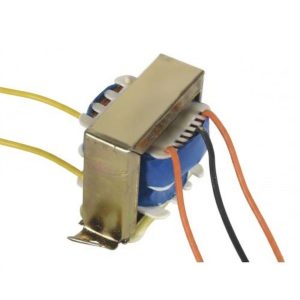
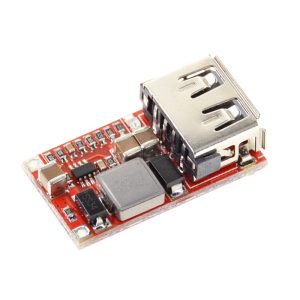

Boost (step-up) converter modules

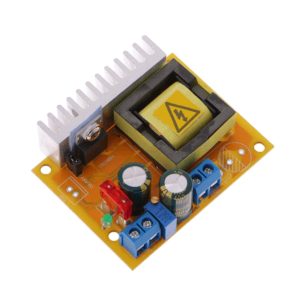
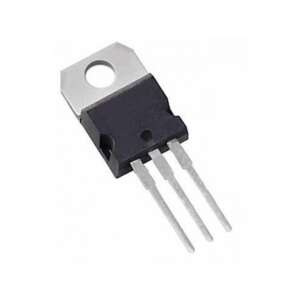
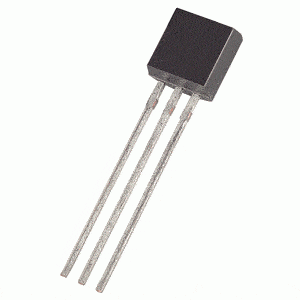
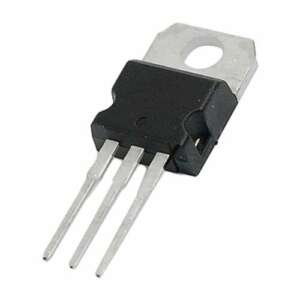
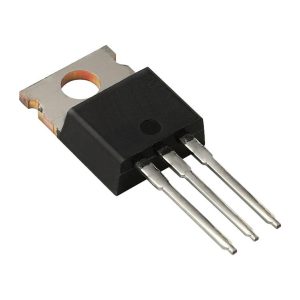
Voltage regulators


Power adapters
More: browse all power supplies and converters and DC-DC converters and voltage regulators.
Which power part do you need?
| Part | What it does | Good for |
|---|---|---|
| Linear regulator (7805, LM317, AMS1117) | Lowers a voltage to a fixed or adjustable value. The extra voltage is burnt as heat, so the heat is (input minus output) times current. | Small loads and low noise, when input and output are close |
| Buck (step-down) converter (LM2596, XL4015) | Switching converter that lowers a voltage with much less heat than a linear regulator | Powering 5 V or 3.3 V electronics from 12 V, 24 V or a battery pack |
| Boost (step-up) converter (MT3608, XL6009, SX1308) | Raises a voltage. The output is always above the input. | Running 5 V or 12 V devices from one Li-ion cell or a small battery |
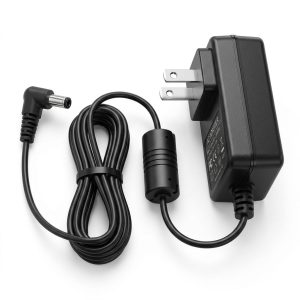
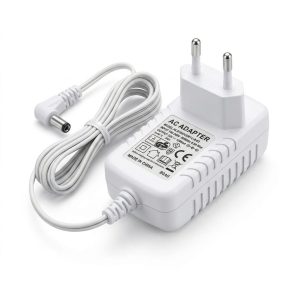
| Power adapter (AC to DC) | Turns mains voltage into a fixed DC voltage | Powering a board, a module or a device from the wall |
| Breadboard power module | Gives 3.3 V and 5 V rails on a breadboard from a barrel jack or USB | Prototyping |
Quick rules
- A buck converter can only lower a voltage and a boost converter can only raise it. Leave a few volts of margin between the input and the output you need.
- Choose a converter or adapter rated for more current than your load draws.
- On adjustable modules, set the output voltage with a multimeter before you connect the board you want to power.
- For a power adapter, match the voltage, the plug size (for example 5.5 x 2.1 mm or 5.5 x 2.5 mm) and the polarity of the plug.
- A linear regulator that drops a large voltage at a high current gets hot: use a buck converter instead, or add a heat sink.
- Add a capacitor near the load when a converter powers sensitive electronics, and keep wiring short.
Guides
- Buck vs boost converters: how to choose the right DC-DC converter
- Buck converter vs LDO regulator: how to choose the right one
- Boost converters: a comprehensive guide to step-up voltage regulation
- LDO vs buck converter step-down voltage circuits: a technical comparison
- How to use a multimeter
Powering a project from batteries? See batteries and chargers in Egypt.
Frequently asked questions
How do I choose between a buck converter and a linear regulator?
If the input is much higher than the output or the load draws a lot of current, a buck converter wastes less energy as heat. A linear regulator is simpler and gives lower output noise when the input is only a little above the output.
Can I power an Arduino or ESP32 from a battery through a converter?
Yes. Use a buck converter if the battery voltage is above what the board needs, or a boost converter if it is below. Set the output voltage with a multimeter before connecting the board, and check the voltage your board expects.
Do you deliver power supplies and converters across Egypt?
Yes. Orders to Alexandria placed before 2:00 PM are usually delivered the same day, and orders to other governorates are usually delivered the next day. These are typical times, not a guarantee. Shipping cost depends on the governorate and is shown at checkout. See Shipping and Delivery.
Can I return power supplies and converters?
Electronic products cannot be returned or exchanged once opened or used, except for confirmed manufacturing defects. Defects must be reported within 3 days of delivery. Full rules: Refund and Returns Policy.
Do you sell power supplies and converters in bulk to schools, universities or companies?
Yes. Contact customer service on +2 0248813824, WhatsApp +20 121 198 1188 or info@makerselectronics.com and you will be connected to the corporate customers team.
Can I visit the store?
Yes: 158 Elhorya St., Elibrahymia, Alexandria, Egypt. Saturday to Thursday 10:00 AM to 8:30 PM, Friday 2:00 PM to 8:00 PM.