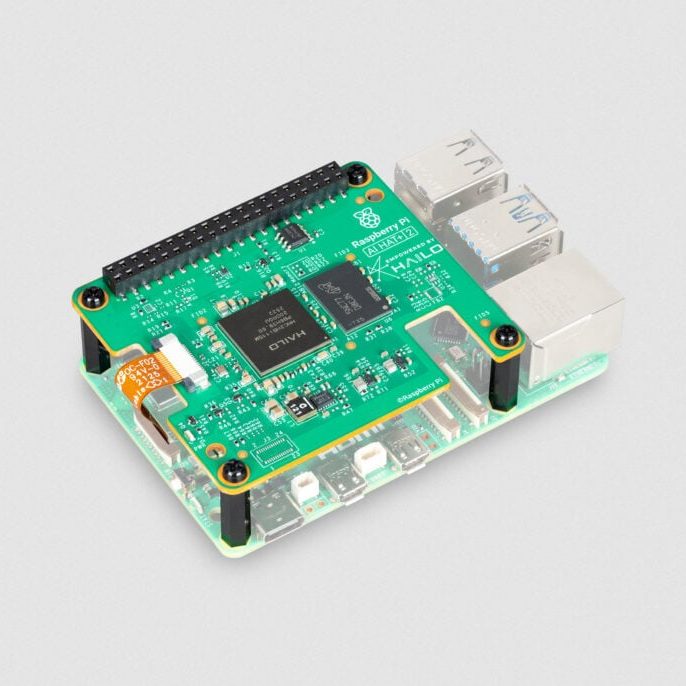
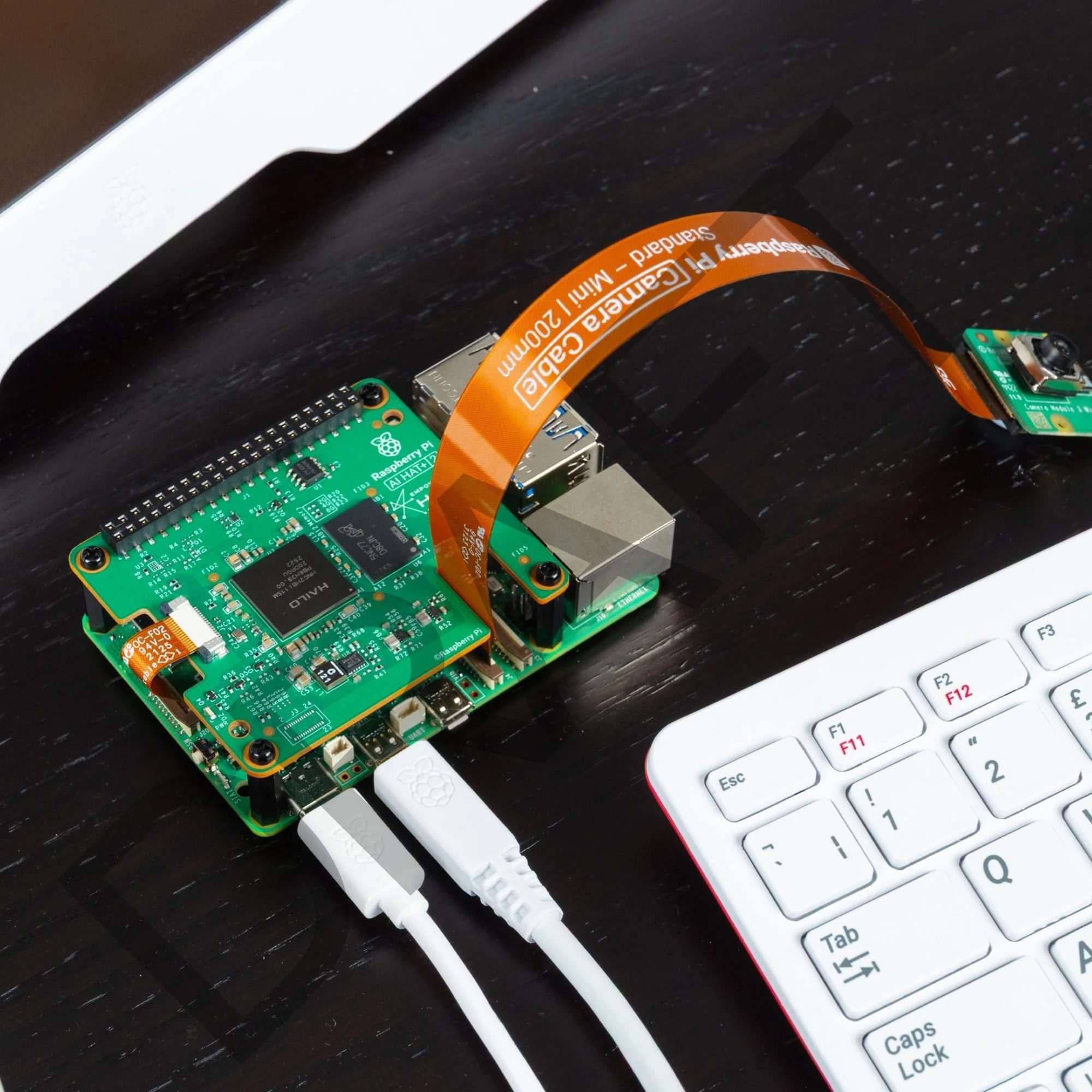
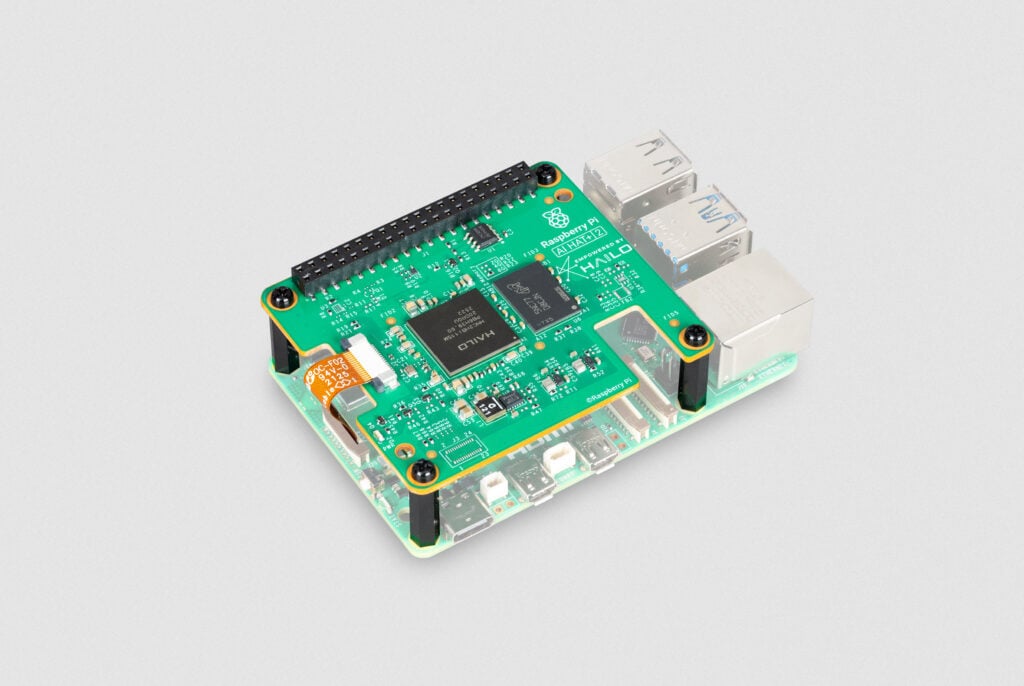
Raspberry Pi AI HAT+ 2 Expansion Board Module is a high-performance generative AI accelerator designed for Raspberry Pi 5, built around the Hailo-10H neural processing unit delivering up to 40 TOPS of INT4 inference performance. It includes 8GB of dedicated onboard memory, enabling efficient local execution of large language models and vision-language models without relying on cloud services. The module supports low-latency, on-device AI processing, improving speed, privacy, and data security for edge computing applications. It is designed for seamless integration with Raspberry Pi OS and existing AI frameworks, allowing easy deployment of machine learning workloads. With its optimized architecture, it enhances real-time performance for robotics, computer vision, and smart automation projects while keeping power usage efficient for embedded systems.
Features
Provides powerful on-device AI acceleration using the Hailo-10H neural processing unit for efficient edge computing performance.
Delivers up to 40 TOPS of inference performance, enabling fast execution of advanced AI models and workloads.
Includes 8GB dedicated onboard memory, allowing smooth operation of large language models and vision-language models locally.
Enables generative AI capabilities on Raspberry Pi 5, supporting modern AI applications beyond traditional vision tasks.
Supports low-latency edge processing, improving real-time responsiveness for robotics, automation, and smart systems.
Ensures data privacy and offline operation by processing AI tasks locally without requiring cloud connectivity.
Integrates with Raspberry Pi OS and AI software frameworks, enabling easy deployment of AI models and applications.
Designed for efficient power usage in embedded systems, making it suitable for continuous AI workloads in compact projects.
Specifications
Parameter
Value
Product Name
Raspberry Pi AI HAT+ 2 Expansion Board Module
AI Accelerator
Hailo-10H Neural Processing Unit
AI Performance
Up to 40 TOPS (INT4 inference performance)
Onboard Memory
8GB dedicated RAM for AI workloads
Target Platform
Raspberry Pi 5
Interface
PCIe connection for high-speed AI processing
Primary Function
Generative AI, edge AI inference, vision-language models
Supported AI Types
Large Language Models (LLMs), Vision-Language Models (VLMs)
Operating Mode
Fully local edge processing (no cloud required)
Software Support
Raspberry Pi OS AI stack and supported ML frameworks
Power Efficiency
Optimized for low-power embedded AI workloads
Board Type
HAT+ expansion board compliant with Raspberry Pi standard
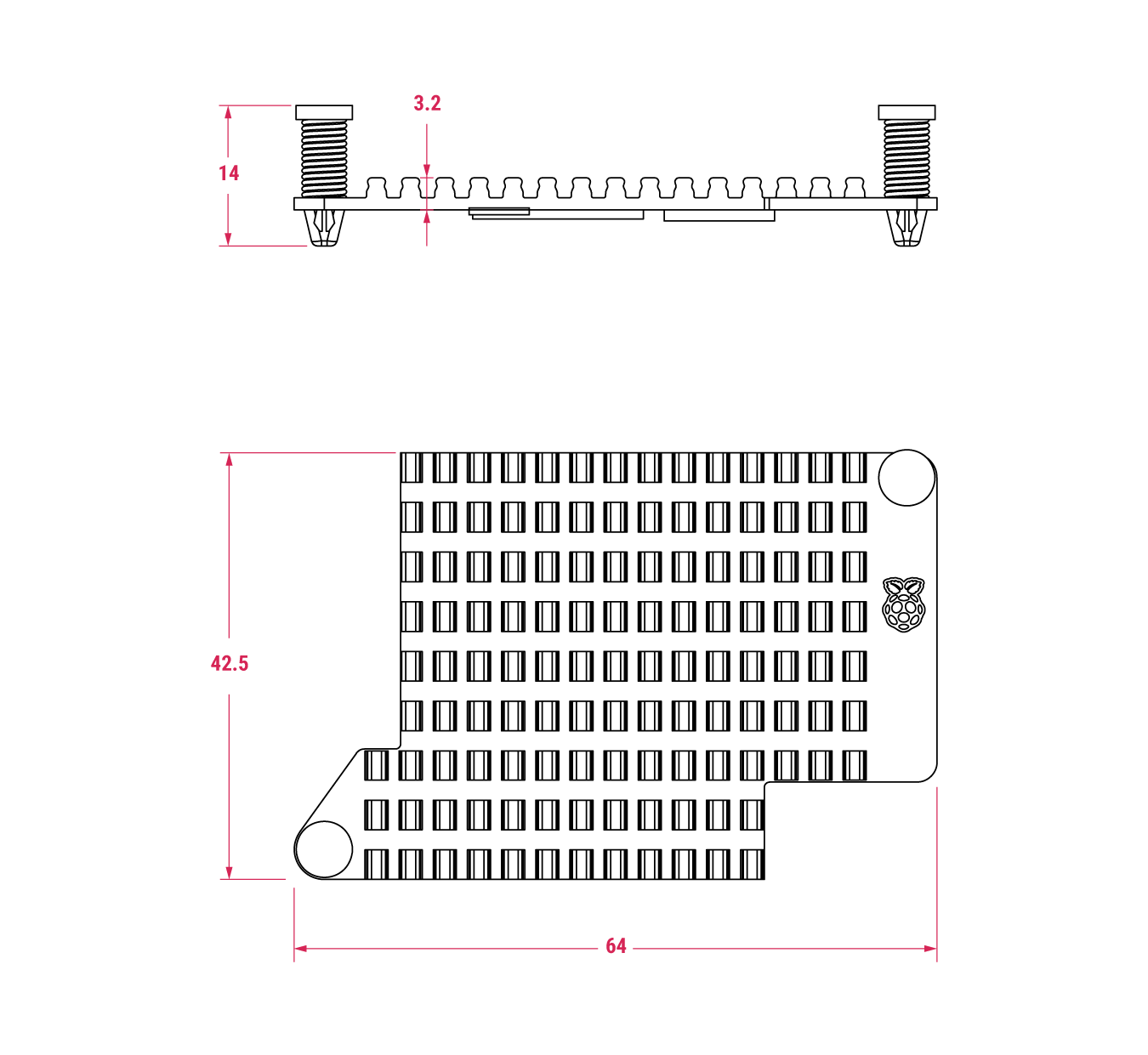
Cooling Support
Compatible with heatsink and thermal management accessories
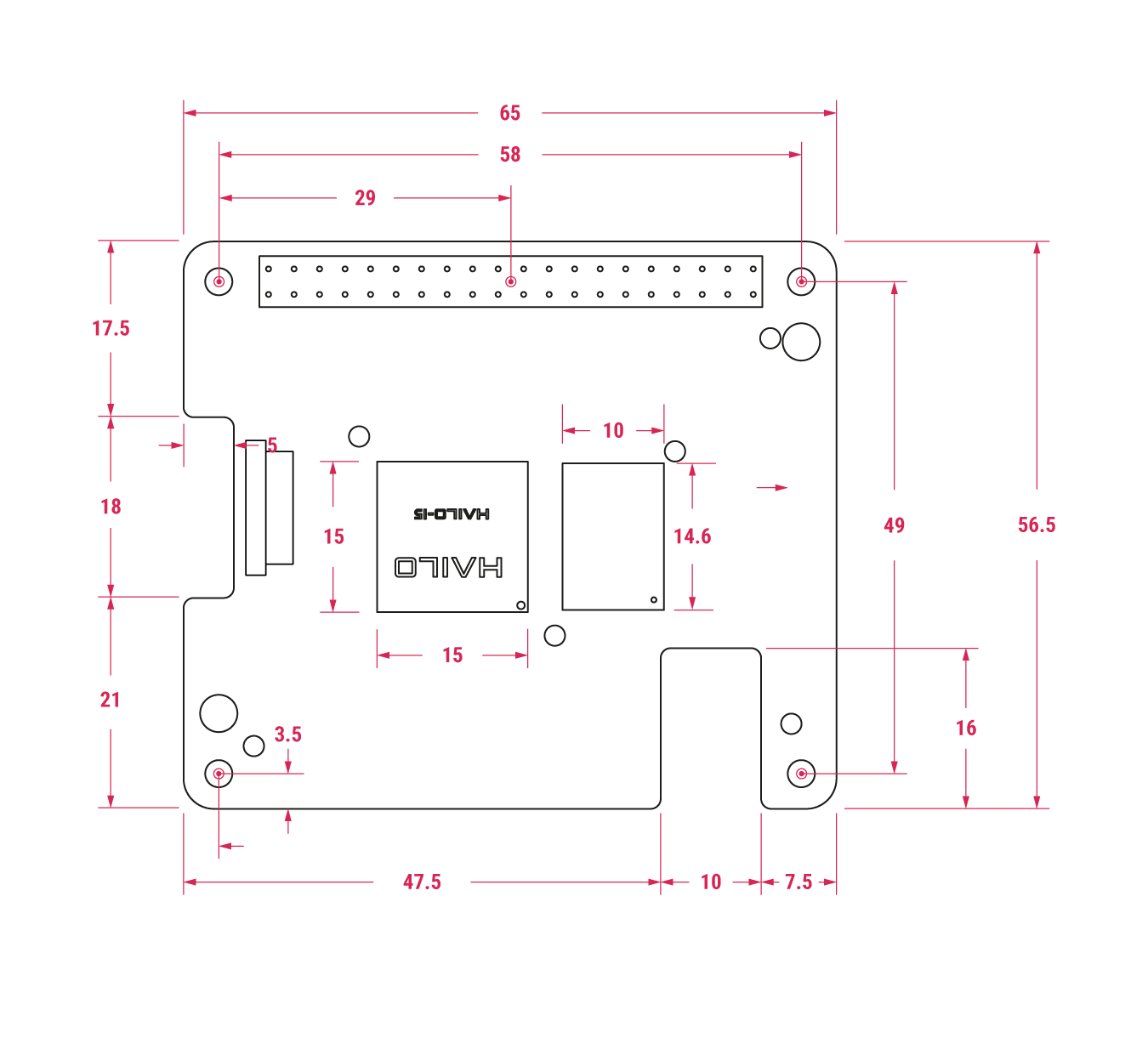
Physical Dimensions
Approx. 66 mm × 56.5 mm
Operating Temperature
0°C to 50°C
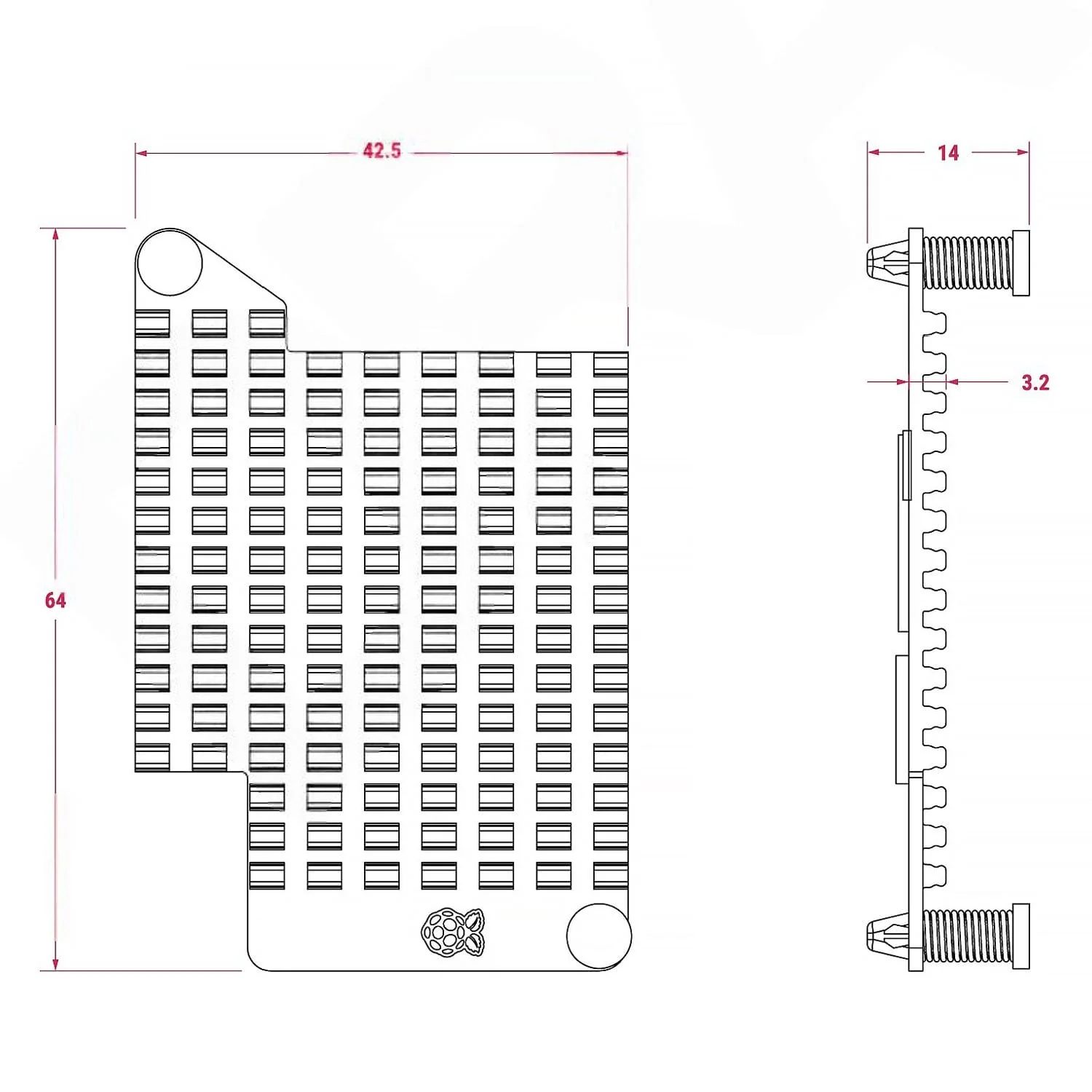
Dimensions
All Dimensions in mm
Pin Configuration
Pin Number
Pin Name
Function / Description
1
3V3
3.3V Power Supply
2
5V
5V Power Input
3
GPIO2 (SDA1)
I2C1 Data line (HAT ID / communication)
4
5V
5V Power Input
5
GPIO3 (SCL1)
I2C1 Clock line (HAT ID / communication)
6
GND
Ground
7
GPIO4
General Purpose I/O
8
GPIO14 (TXD0)
UART Transmit
9
GND
Ground
10
GPIO15 (RXD0)
UART Receive
11
GPIO17
General Purpose I/O
12
GPIO18
PWM / General Purpose I/O
13
GPIO27
General Purpose I/O
14
GND
Ground
15
GPIO22
General Purpose I/O
16
GPIO23
General Purpose I/O
17
3V3
3.3V Power Supply
18
GPIO24
General Purpose I/O
19
GPIO10 (MOSI)
SPI0 MOSI
20
GND
Ground
21
GPIO9 (MISO)
SPI0 MISO
22
GPIO25
General Purpose I/O
23
GPIO11 (SCLK)
SPI0 Clock
24
GPIO8 (CE0)
SPI Chip Enable 0
25
GND
Ground
26
GPIO7 (CE1)
SPI Chip Enable 1
27
GPIO0 (ID_SD)
HAT EEPROM / ID I2C
28
GPIO1 (ID_SC)
HAT EEPROM / ID I2C
29
GPIO5
General Purpose I/O
30
GND
Ground
31
GPIO6
General Purpose I/O
32
GPIO12
PWM / General Purpose I/O
33
GPIO13
PWM / General Purpose I/O
34
GND
Ground
35
GPIO19
PWM / SPI/ALT function
36
GPIO16
General Purpose I/O
37
GPIO26
General Purpose I/O
38
GPIO20
General Purpose I/O
39
GND
Ground
40
GPIO21
General Purpose I/O
Applications
Real-time object detection and scene understanding using camera-based AI processing.
Vision-language applications such as image description and smart visual assistants.
Large language model (LLM) inference directly on-device for offline AI chat and assistants.
Smart robotics control systems with AI-powered perception and decision-making.
Industrial automation and process monitoring using edge AI analytics.
Security and surveillance systems with local video analysis and motion detection.
Smart home automation with AI-driven sensing, recognition, and control.
Speech-to-text and voice assistant applications running fully offline.
Intelligent IoT edge devices that reduce cloud dependency and latency.
Research and prototyping for generative AI and machine learning at the edge.